
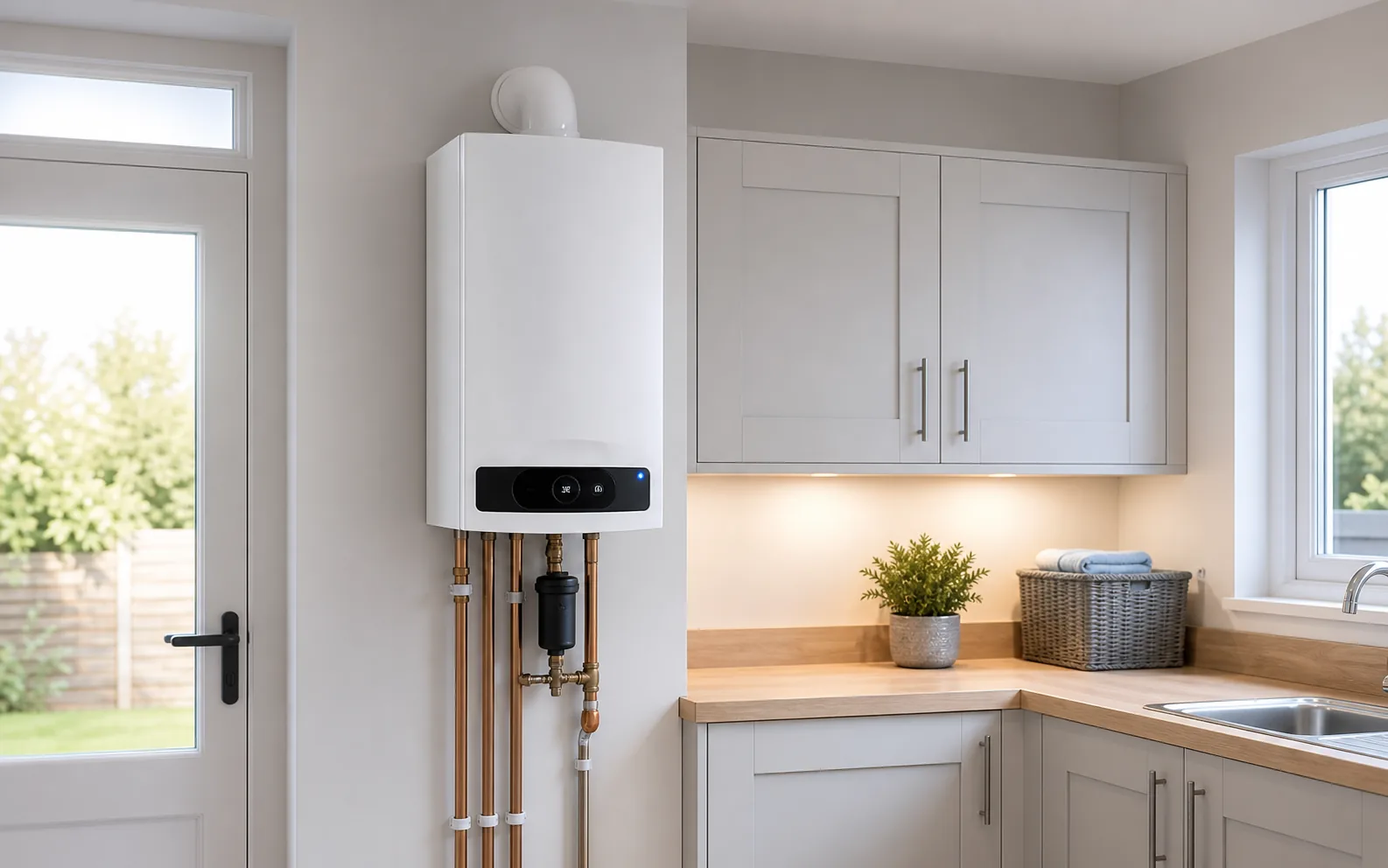
When a boiler stops working, the cause may be a control setting, low pressure, a supply issue or a fault that requires a Gas Safe registered engineer. A few safe visible checks can save time, but they should never involve opening the appliance or working on gas components.
1. Check the thermostat and programmer
Set the room thermostat above the current room temperature and confirm that the heating schedule is active. If the thermostat is wireless, check its display and batteries. Make sure a recent power cut has not reset the programmer.
If hot water works but heating does not, note that detail. It can help distinguish a heating-control issue from a complete boiler lockout.
2. Read the pressure display
Many sealed heating systems normally sit around 1 to 1.5 bar when cold, but the correct range varies. If the display shows low pressure, follow the boiler manufacturer's instructions for your exact model or call for advice.
Do not keep adding water repeatedly. Pressure that falls again can indicate a leak, expansion-vessel issue or pressure-relief discharge that needs investigation.
3. Write down the error code
Modern boilers often show a code or symbol when they lock out. Photograph the display and note the make and model. Give this information to the engineer when booking, but do not assume an online description confirms the failed component.
Different versions of the same boiler can use similar codes for several possible causes. Diagnosis still requires the correct checks.
4. Check the property supplies
Confirm that electricity is available at the boiler controls and that no relevant circuit breaker has tripped. If you safely use another gas appliance, note whether the wider gas supply appears to be working.
If you suspect a gas-supply problem or smell gas, do not investigate. Leave the property, avoid electrical switches and call the National Gas Emergency Service on 0800 111 999.
5. Look for an external condensate issue in freezing weather
Some condensing boilers can lock out if an external condensate pipe freezes. Only follow the manufacturer's safe homeowner guidance for your installation. Never use boiling water, climb unsafely or dismantle pipework. If access is awkward, call an engineer.
6. Use the reset only as instructed
A single reset may be appropriate after you have checked the manual and corrected a simple issue such as restored pressure. Repeated resetting without understanding the fault can mask a problem and should be avoided.
When to stop checking and call
- The pressure repeatedly drops after following the manual.
- Water is leaking from the boiler or nearby pipework.
- The appliance makes severe banging, grinding or popping noises.
- The error returns after one appropriate reset.
- You see scorching, damaged wiring or signs of overheating.
- You smell gas or a carbon monoxide alarm activates.
For a carbon monoxide alarm, leave the property, seek emergency advice and do not use the appliance until it has been checked.
Information that helps the engineer
When booking, provide the boiler make and model, error code, pressure reading, whether heating or hot water is affected, when the problem started and any recent work or pressure loss. This helps plan the visit, although parts cannot always be identified before diagnosis.